Showing Results for

Back to Disease Search

The Problem

Jump to the Solution

White mold

  • Cause: Sclerotinia sclerotiorum
  • Environment: Cool to moderate temperatures combined with prolonged moisture.
  • Timing: Infection occurs during flowering (R1-R3). Symptoms become visible during pod development and rill (R3-R5).
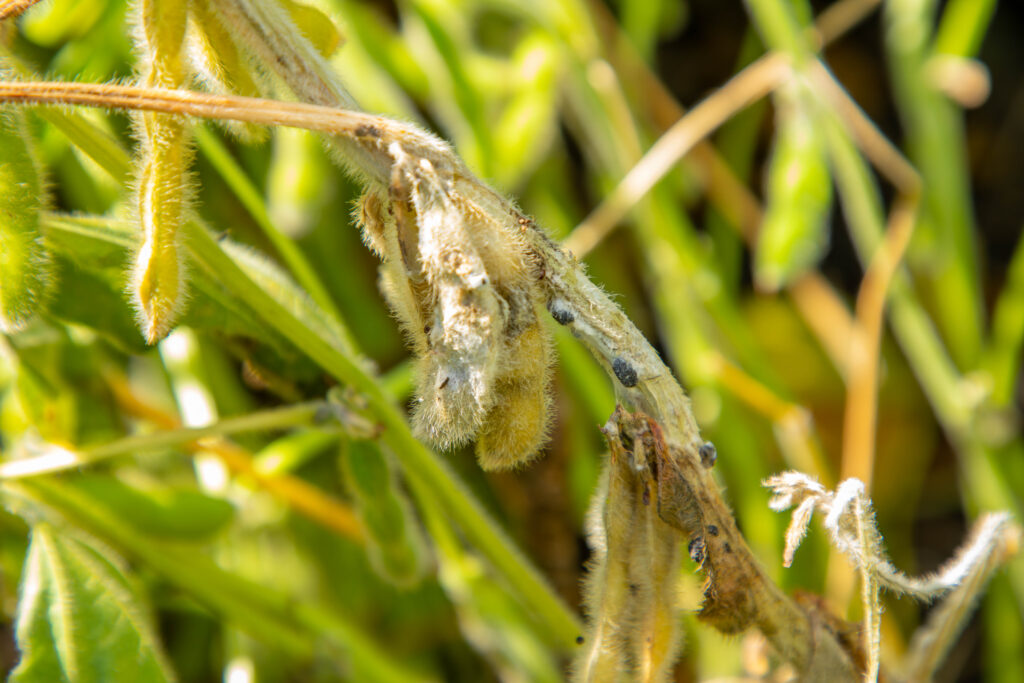
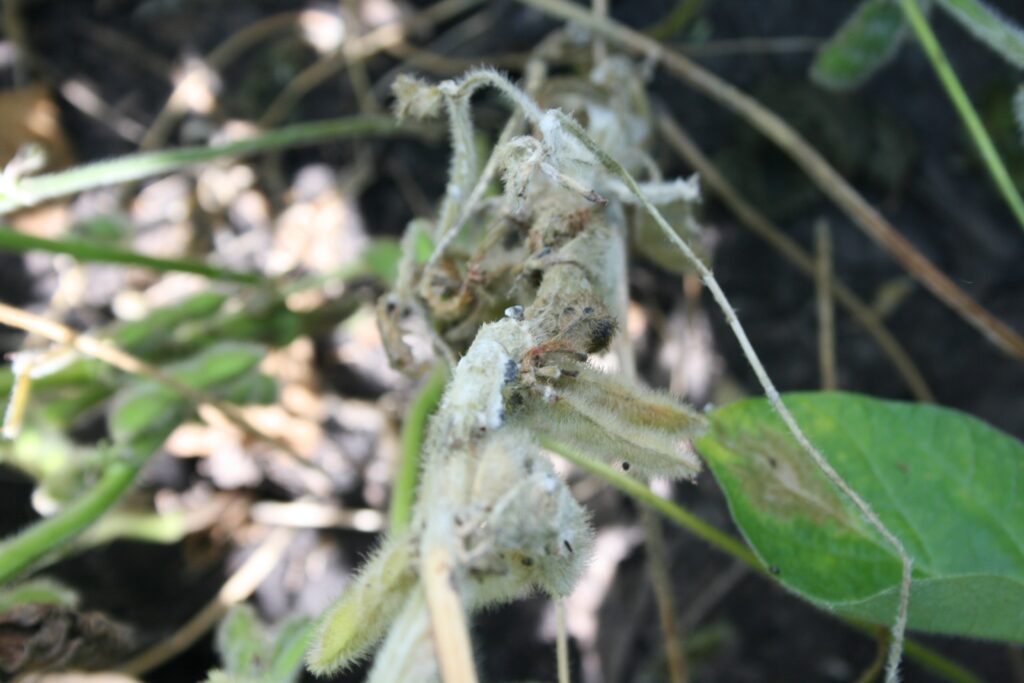
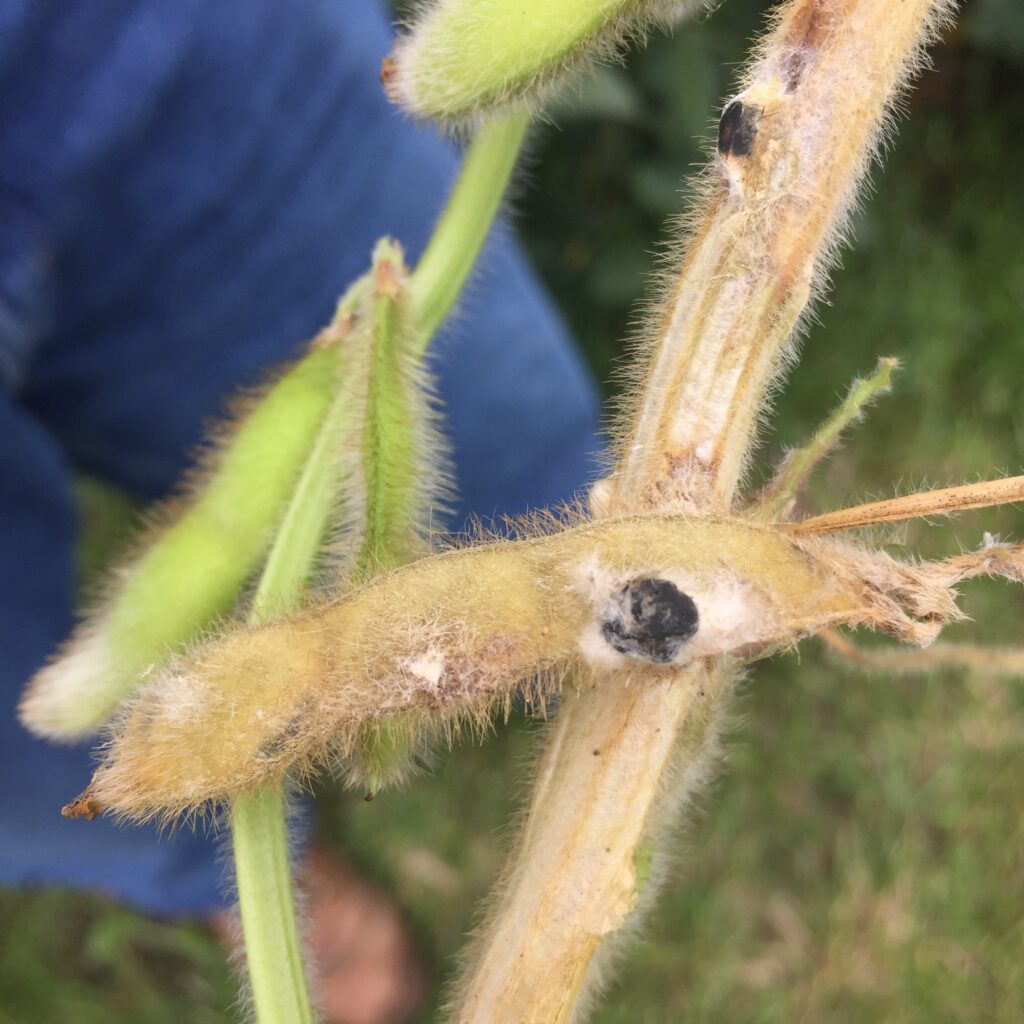
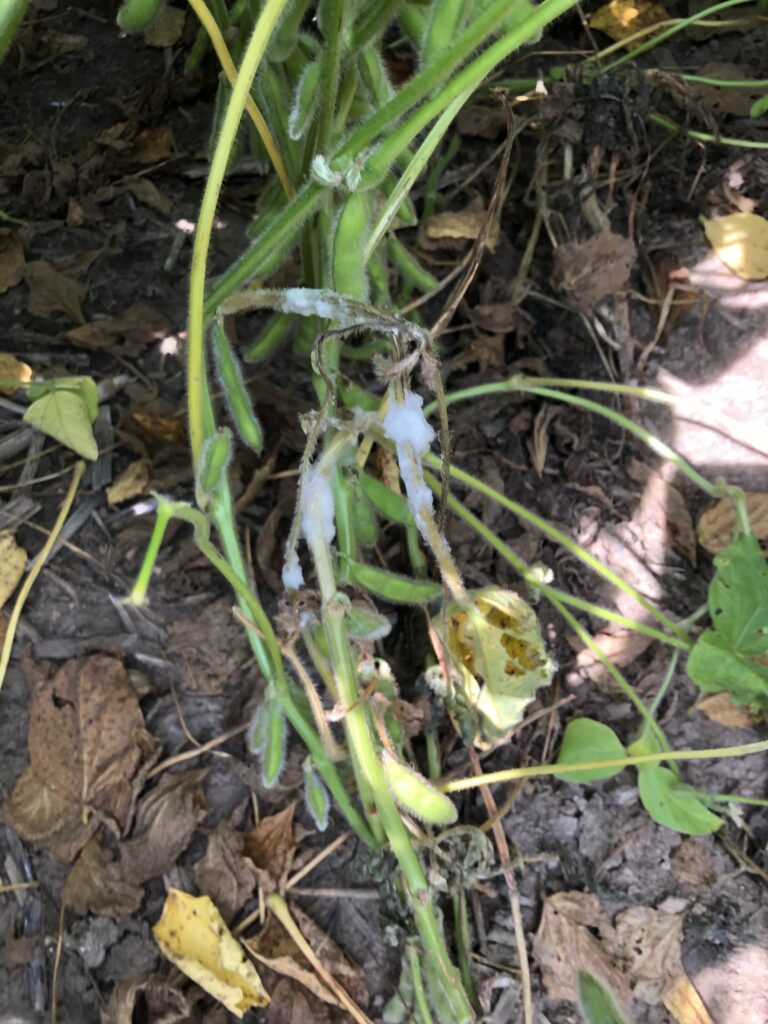
  • Appearance: White, fluffy fungal growth on stems, branches and pods. Plants may turn gray or bleached and die prematurely. Black sclerotia may form inside stems or pods.
  • Risk: Significant yield loss, lodging, harvest difficulty and long-term field contamination.
Photo of White mold on soybeans (Sclerotinia stem rot)

Image of white mold on soybean pods

Photo of White mold on soybeans (Sclerotinia stem rot)

White mold on soybean stems

Photo of White mold on soybeans (Sclerotinia stem rot)

Close-up of soybean pod infected with white mold

Photo of White mold on soybeans (Sclerotinia stem rot)

White mold on soybean stems

Soybean stem with white fuzzy fungal growth on surface.

White fungal growth appears on stems and branches

Soybean plant with wilted stems and visible fungal growth from white mold.

Severe white mold cases cause plant death and yield loss

Dead soybean plants with bleached stems and collapsed structure.

White mold can cause bleached stems and collapsed structure

Expand to Learn More

Understanding White Mold in Soybeans

White mold develops when Sclerotinia sclerotiorum infects soybean plants during flowering under cool, wet conditions. The disease often appears in patches in low, wet areas of the field and may go unnoticed early, increasing its impact as the season progresses. The disease can manifest in three key ways:

Stem infection

Fungal growth girdles stems, restricting water and nutrient movement.

Plant wilting and death

Infected plants wilt rapidly and may die prematurely.

Sclerotia formation

Black structures form inside plant tissue, allowing the disease to persist in fields for years.

Why White Mold Matters

White mold is one of the most yield‑limiting soybean diseases in the United States. In addition to immediate yield loss, the disease can persist long‑term through sclerotia in the soil, increasing risk in future soybean rotations. Effective management is critical to protecting yield potential and long‑term field productivity.


Since white mold thrives in cool, wet conditions during flowering, it is most commonly found in the northern Soybean Belt like Minnesota, Wisconsin and Michigan, where dense canopies and prolonged moisture increase risk.

Why White Mold Matters

The Solution

Use Miravis Neo to Fight White mold

  • Active Ingredients: ADEPIDYN® technology, Azoxystrobin, Propiconazole
  • Why Miravis Ace Works: Delivers dual-yield protection with broad‑spectrum disease control with a long‑lasting residual and added plant‑health benefits.
  • Crops: Corn and Soybeans
  • Benefits: Delivers consistent, comprehensive control and is the only premium fungicide labeled for Fusarium / Gibberella ear rots.

Why Use a Cleaner & Greener Fungicide?

From disease to crop stress, you don't know what the season will bring so your yield potential needs protection on all fronts! That's why only Cleaner & Greener fungicides are powered by exclusive ADEPIDYN® and SOLATENOL® technologies to provide a step change in broad-spectrum disease control and protection from crop stress like drought.

Cleaner & Greener