Sorry, there are currently no trials for in . Showing nearby available trials.
Showing Results for
The Problem
Jump to the SolutionSouthern Rust
- Cause: Puccinia polysora
- Environment: Warm temperatures and high humidity.
- Timing: Infection occurs from tasseling through grain fill.
- Appearance: Small, orange to light brown pustules that form on both the upper and lower leaf surface. Pustules may become numerous, causing leaves to appear speckled and lead to premature leaf death.
- Risk: Yield loss, decreased photosynthetic leaf area, premature leaf death, reduced kernel size, lower test weight and increased risk of lodging.
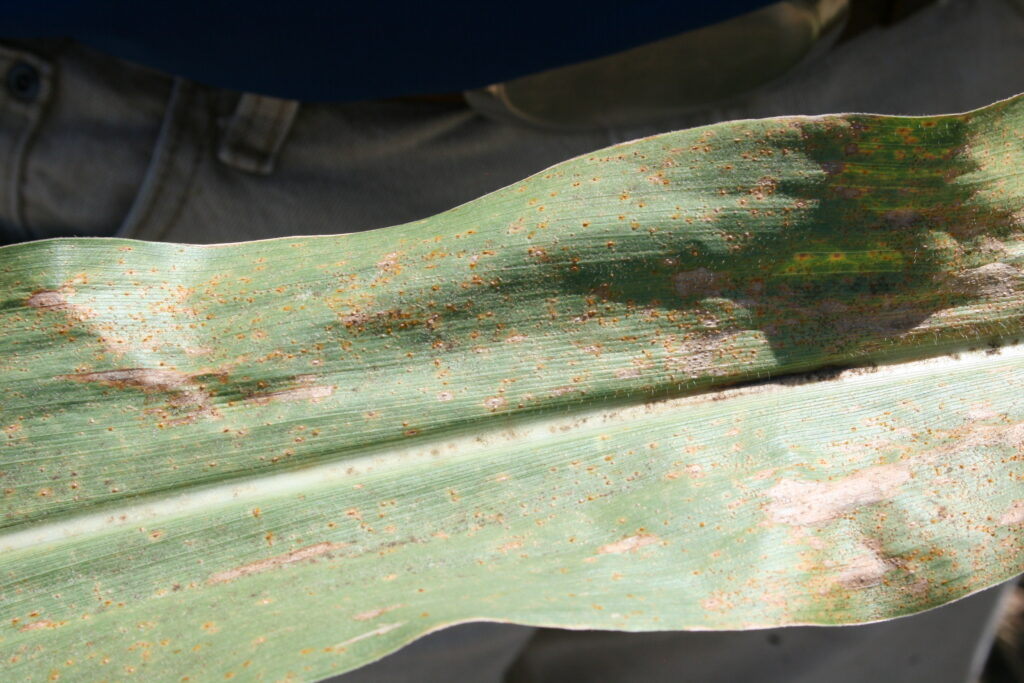
Southern rust present on corn leaf surface
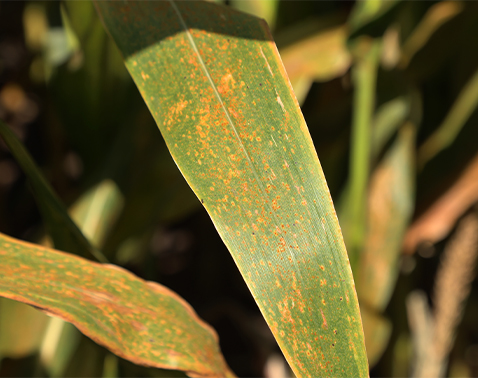
Small orange pustules form on leaf surfaces
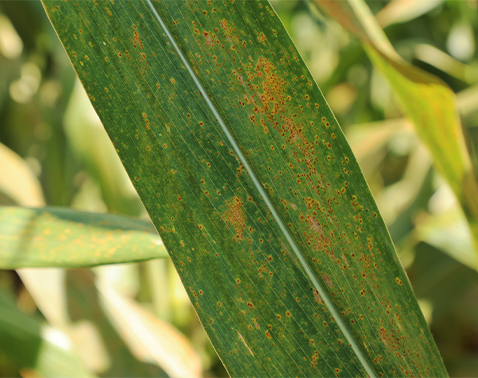
Pustules can increase, giving leaves a speckled appearance
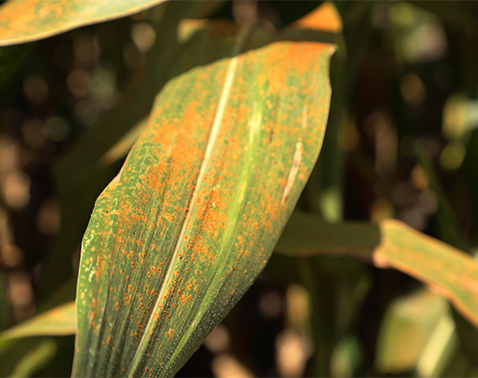
Severe Southern rust infection causes leaf death and yield loss
Expand to Learn More Minimize
Understanding Southern Rust in Corn
Southern rust develops when Puccinia polysora spores infect corn leaves and reproduce rapidly under favorable weather conditions. Unlike some other foliar diseases, Southern rust does not overwinter and must recolonize ever year. North-blowing winds carry spores to corn fields where it can then spread quickly and intensify late in the season. The disease can manifest in three key ways:

Upper canopy infection
Pustules are mostly found on upper leaves, reducing photosynthetic capacity.
Rapid disease spread
Pustules contain thousands of spores that can cause further infection in as few as 7 days. Multiple infection cycles occur quickly under warm, humid conditions.
Yield impact
Loss of green leaf tissue during grain fill limits carbohydrate production and kernel development.
Why Southern Rust Matters
Southern rust is considered one of the most damaging diseases of corn due to its rapid spread and potential for severe yield loss. When disease develops early and conditions remain favorable, Southern rust can quickly reduce yield potential and crop standability. In 2025, Southern rust alone caused an estimated 500 million lost bushels in the U.S. Proactive scouting and timely and preventative fungicide applications are critical to minimizing losses.
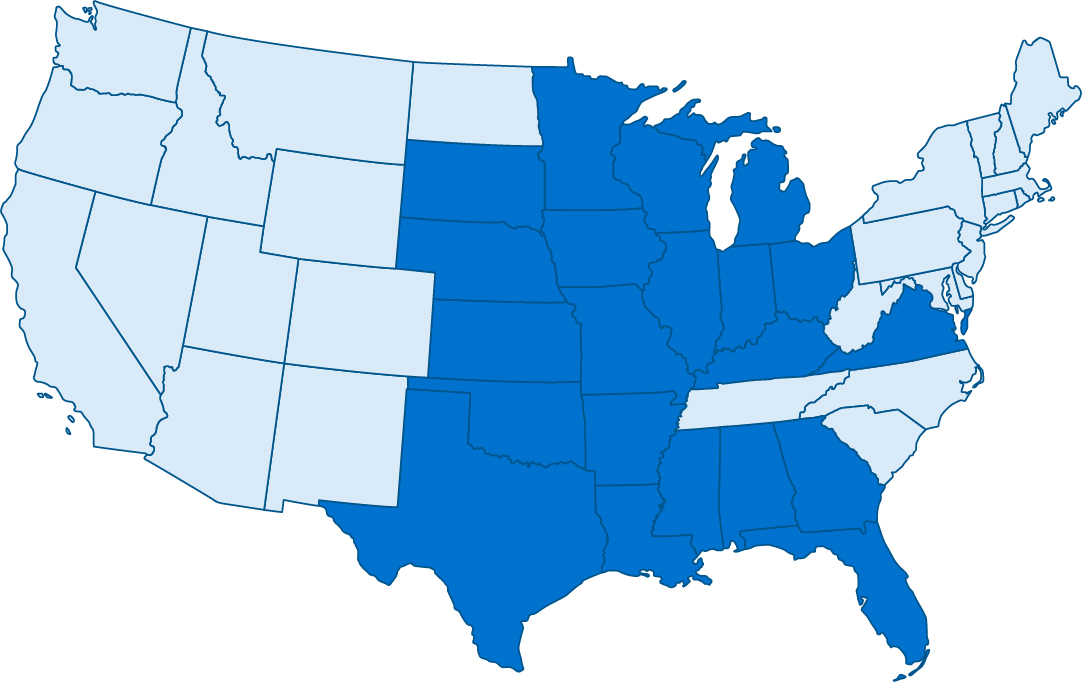
Since Southern rust spores are carried from tropical regions by north-blowing winds, it is most commonly reported in lower parts of the Corn Belt like Kansas and Missouri, though it can appear as far North as Iowa, Minnesota and Wisconsin – if conditions are right.
The Solution
Use Trivapro to Fight Southern Rust

Use Trivapro to Fight Southern Rust
- Active Ingredients: SOLATENOL® technology, Propiconazole, Azoxystrobin
- Why Trivapro Works: Combines harder-working preventive and curative activity with extended residual control to help corn and wheat yield stronger
- Crops: Corn, Wheat and Soybeans
- Benefits: Controls a wide range of foliar diseases, including Northern corn leaf blight, tar spot and Southern rust, while delivering proven plant‑health benefits.
Why Use a Cleaner & Greener Fungicide?
From disease to crop stress, you don't know what the season will bring so your yield potential needs protection on all fronts! That's why only Cleaner & Greener fungicides are powered by exclusive ADEPIDYN® and SOLATENOL® technologies to provide a step change in broad-spectrum disease control and protection from crop stress like drought.